
Making Of: ‘Helena is Leaving the Riviera’
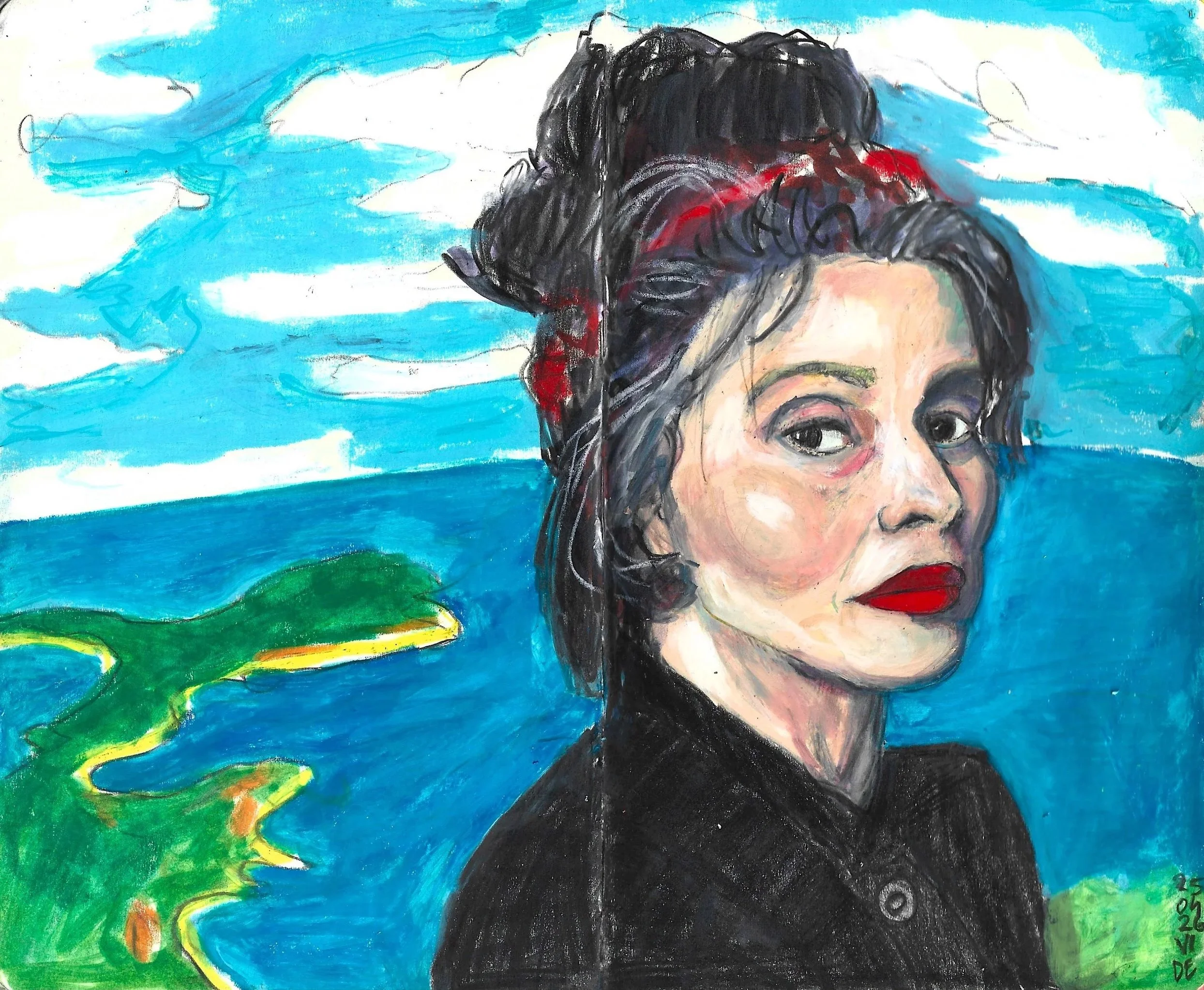
Helena is Leaving the Riviera, Virgile Demo, Black Pencil & Wax Pastel on Paper, Sketchbook, 25 April 2026
MAKING OF A DRAWING · DEMO DEMA
On illustration, intuition, and the art of the well-timed response.
VISUAL STORYTELLING | EDITORIAL ILLUSTRATION | PORTRAIT | PROCESS
When Helena Bonham Carter departed the set of The White Lotus Season 4, the internet did what it does — and within hours, we were already drawing. Here is how Helena is Leaving the Riviera came to be: the idea, the references, the digital scaffolding, and the very analogue pastel finish.
1 | THE CONCEPT
First things first: the idea
The brief wrote itself. A departure calls for a portrait — and not just any portrait: Helena Bonham Carter set against the unmistakable blue of the Côte d'Azur.
For the backdrop, we looked to the bay of Villefranche-sur-Mer, with the green ridge of Saint-Jean-Cap-Ferrat dissolving into the distance. A creative licence, admittedly : the season is set further west, around Cannes and Saint-Tropez.
2 | RESEARCH
Sourcing the references
Two images anchored the composition: a portrait of Bonham Carter sourced from the official White Lotus press materials, and a wide-angle photograph of the Riviera coastline — land in the foreground, the Mediterranean stretching beyond.
Getting the references right before a single mark is made is, in our view, non-negotiable. A drawing is only as strong as the material it is built from.
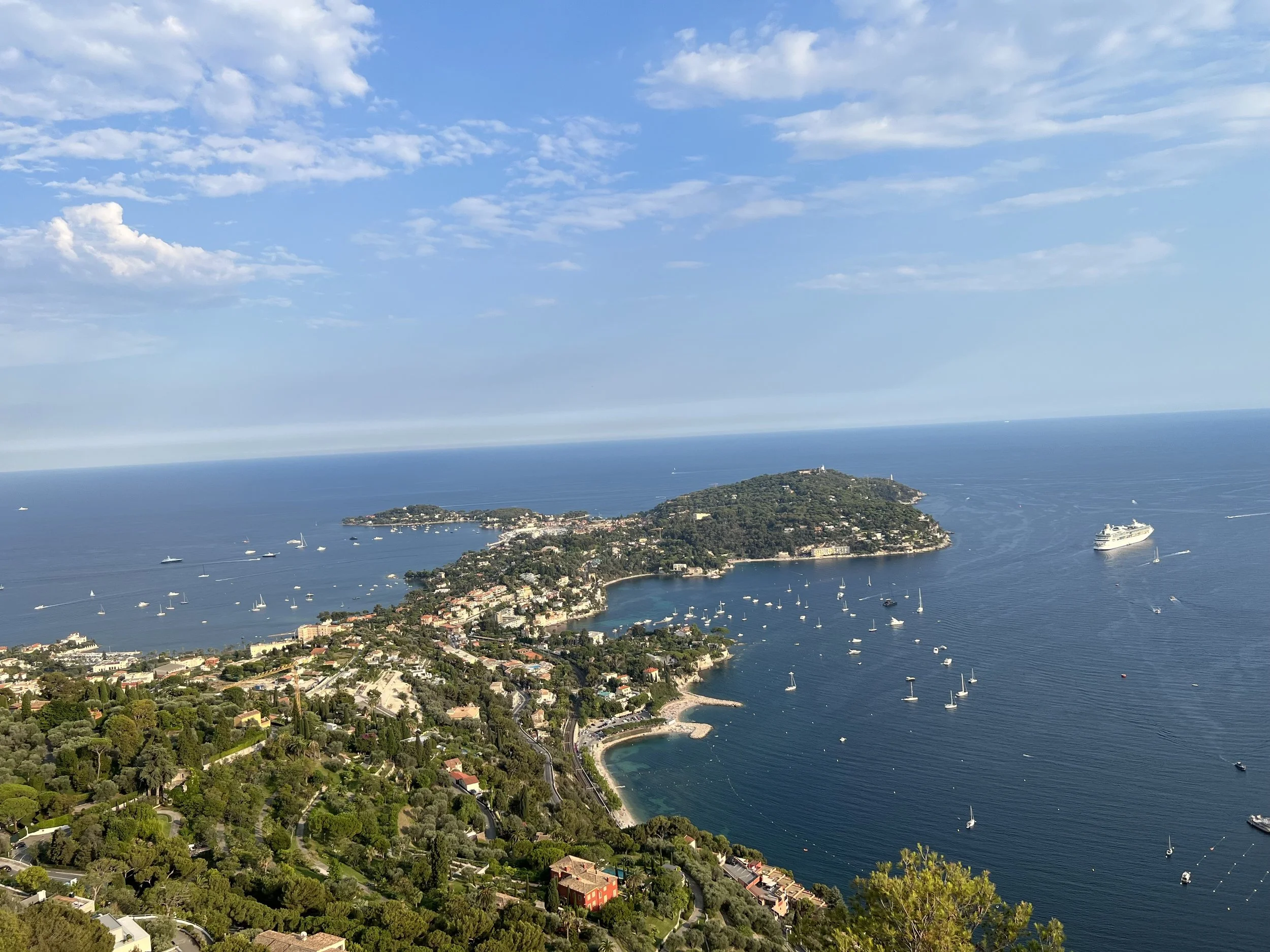
A view of Saint-Jean-Cap-Ferrat , with the Mediterranean in the background,
3 | CONSTRUCTION
Digital collage
Before the first pencil line, the composition is resolved digitally. The portrait was placed centre-right. A deliberate choice that opens the left side of the frame to the landscape, giving the image space to breathe and the eye a direction to travel.
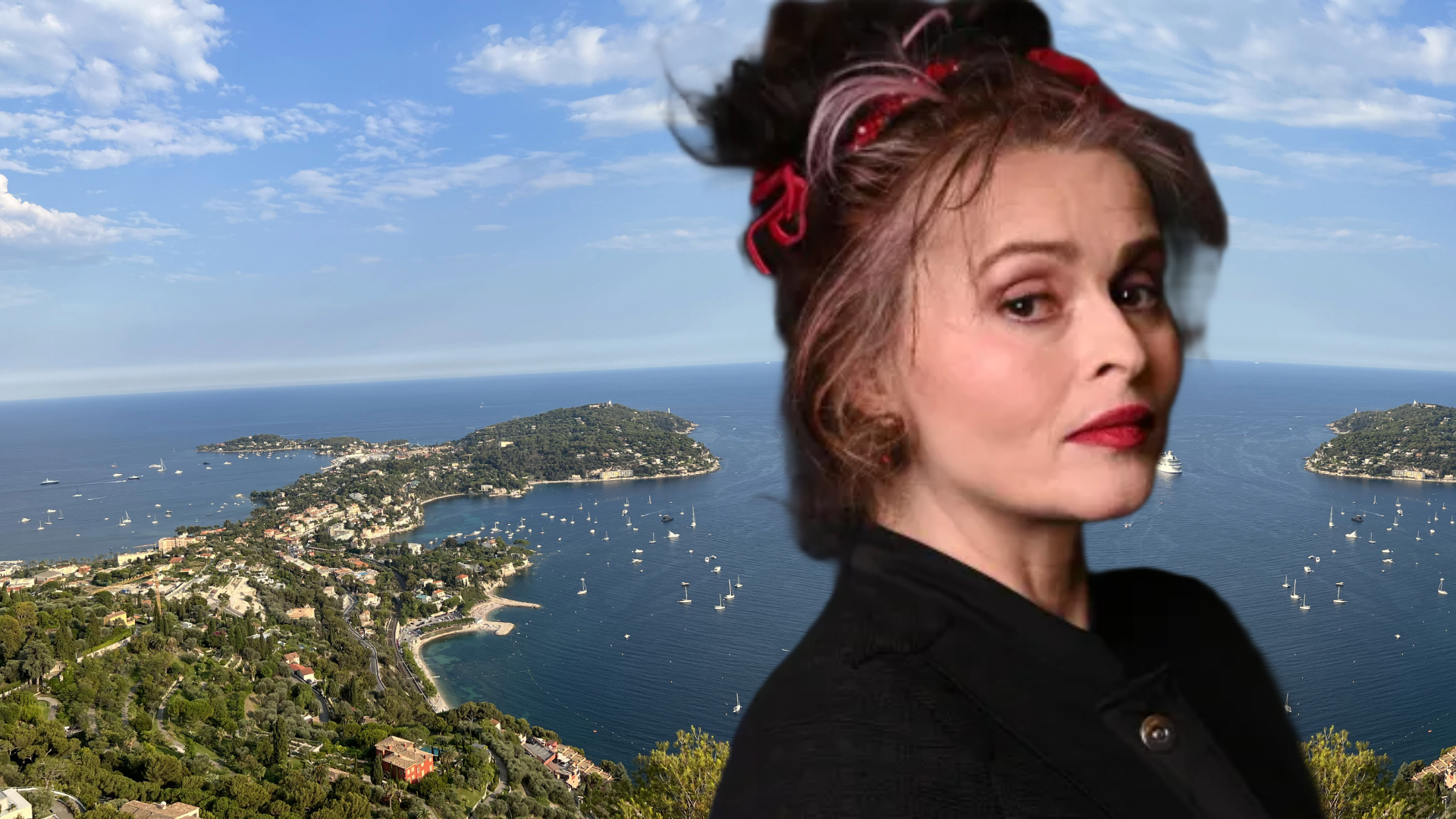
Digital collage of Helena Bonham Carter in front Saint-Jean-Cap-Ferrat, French Riviera
4 | EXECUTION
The drawing
Everything starts with a line. A clean horizon to orient the image, then the portrait built up from there — structure first, always. Pastel follows: applied, corrected, layered again. It is not a linear process. There is a great deal of going back, of looking, of not being sure, and then being sure.
The final step is fixative — a light spray that sets everything in place and gives the surface a quiet, unified finish. After that, the drawing is done.
Et voilà.